The Origin
As kids, we couldn't say Paati — the Tamil word for grandmother. So we called her Paapi instead.
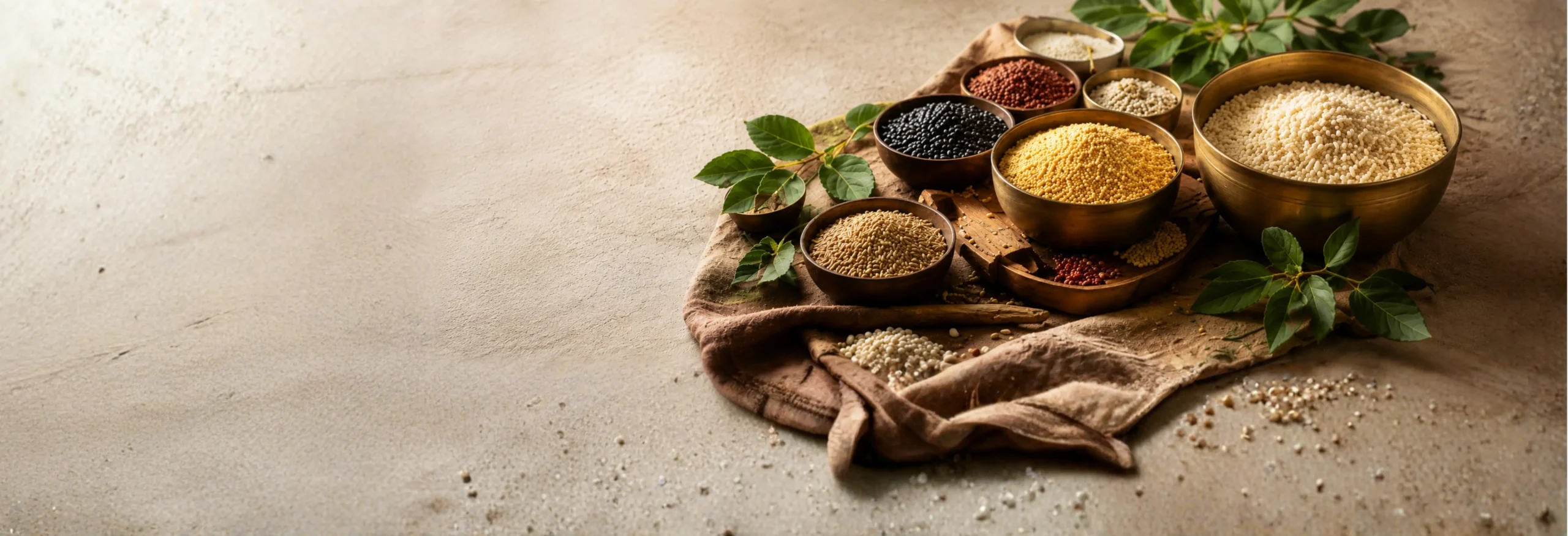
Her kitchen has never had maida, refined sugar, or a preservative. Not as a health stance — those words weren’t part of her vocabulary. Her kitchen predated them. She cooked with Black Kavuni rice, Mapillai Samba, Pirandai, Mudakathan, Sundakkai, Moringa. Tamil grains and herbs that her family ate for decades without needing a reason.
Then three things arrived and replaced all of it. Maida, because it was cheap. Refined sugar, because it stored well. Preservatives, because modern life demanded shelf life over nutrition. One generation of urban Indian families made that trade quietly. Nobody announced it. The grains just stopped appearing.
When Eating right still felt wrong
I got married without knowing how to cook. For a while that was manageable. Then it wasn’t.
Most evenings ended with a Swiggy order. Weekends I’d walk through organic stores looking for something genuinely healthy — something with ingredients I could read. Every label promised clean and natural. The ingredient lists said something different: maida, refined sugar, maltodextrin, preservatives dressed up as health food. The few products with clean labels tasted like cardboard.
Cooking every day changed nothing. My husband and I were still exhausted. My cycles were irregular, my skin was breaking out, and I had low energy that no doctor could explain.
So I went back to my mother and grandmother.
“They’d never stopped cooking with the grains most urban kitchens had abandoned”
Black Kavuni rice. Mapillai Samba. Pirandai for bone strength. Mudakathan for joints and gut. Moringa that Tamil families had used as an everyday ingredient for generations. No maida. No refined sugar. Nothing my grandmother couldn’t name by sight.
What I hadn’t known was how protein-rich these grains are. Black Kavuni has close to 9g of protein per 100g. Mapillai Samba, nearly 8g. Foxtail millet, 12g. The polished white rice in most packaged dosa and idli mixes sits under 3g. My grandmother never counted a gram in her life. She just knew what kept a family strong.
Within a few months of eating the way they cooked, the fatigue lifted and my cycle settled. A few months after that, I conceived naturally. This is my personal experience, not a health claim — but it changed what I ate and how I thought about food entirely.
Motherhood sharpened everything. My grandmother and aunt prepared homemade porridges and health mixes for my daughter from her first solids. I started sharing recipes on Instagram, then ran Baby-Led Weaning and nutrition workshops for over 100 parents — most had the same questions I once had.
Black Kavuni and Mapillai Samba
— grains my grandmother never stopped cooking with.
My daughter's first solids came from this kitchen.
Why PAAPI exists?
Every healthy food brand we found was built on the same three things — maida, refined sugar, preservatives — just dressed up differently.
Nobody was bringing back Tamil superfoods. Nobody was making food with Black Kavuni, Mapillai Samba, Pirandai, Mudakathan — actually clean, actually protein-rich, actually ready in five minutes. That space was empty.
We built Paapi to fill it.
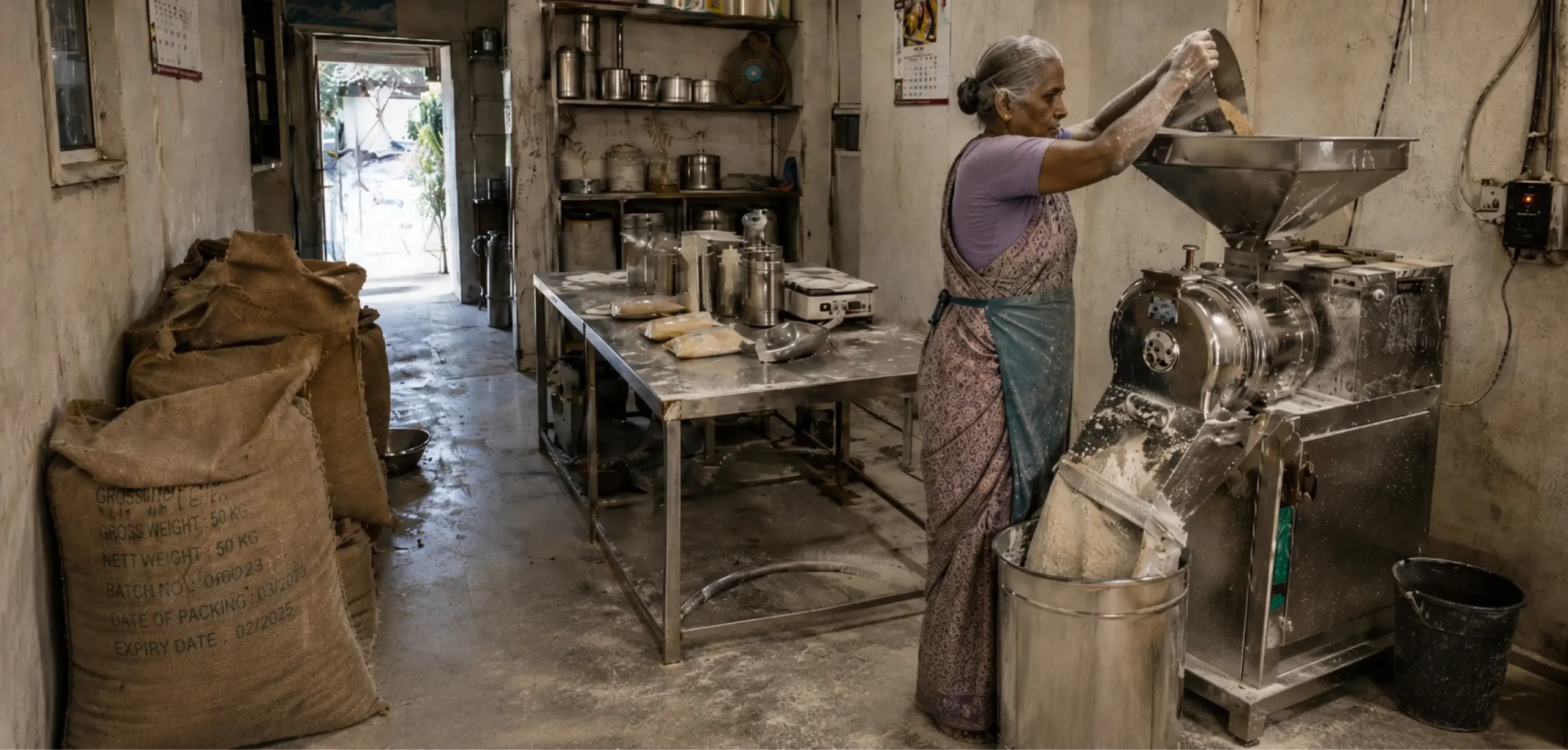
My aunt, who had spent years cooking with these grains, helped us develop the first recipes. We named it after my grandmother — Paapi, the name her grandchildren gave her because they couldn’t say Paati. She still cooks. She still tastes every recipe before it ships.
What WE Make?
Five minutes. Full nutrition
Every product from Paapi starts from the same place: grandmother’s kitchen, before maida, refined sugar, and preservatives arrived.
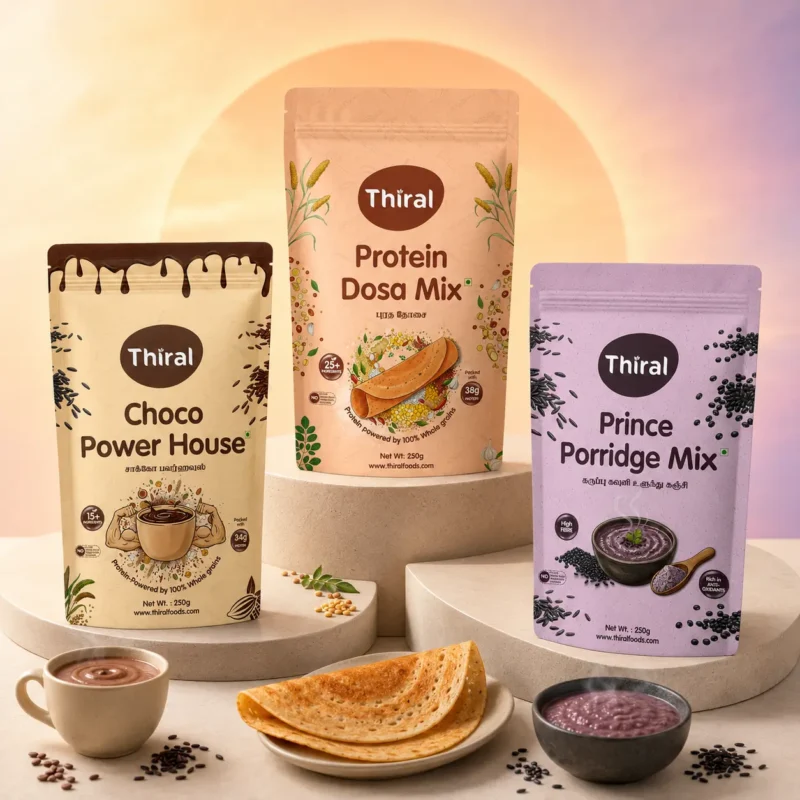
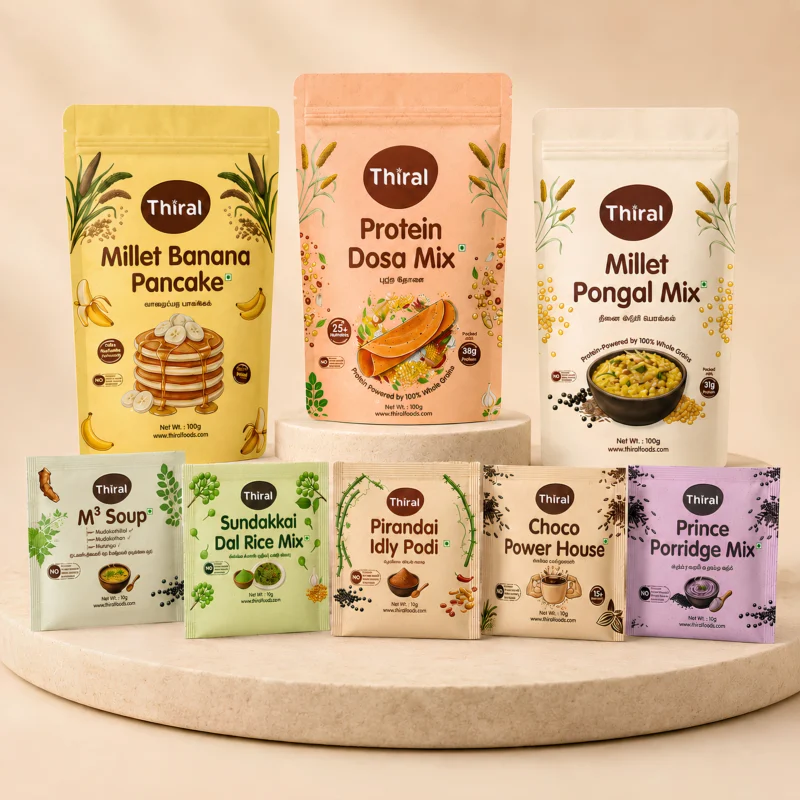
The Choco Power House came from watching kids refuse every health drink we tried. Most mixes are flavourless and children figure that out fast. We rebuilt the formula using Black Kavani and Mapillai Samba heritage rice flakes as the base — grains with close to 9g protein per 100g, compared to under 3g in standard ragi-based mixes — and added natural cocoa sweetened with brown sugar. No refined sugar. Kids finish it. Parents stop negotiating.
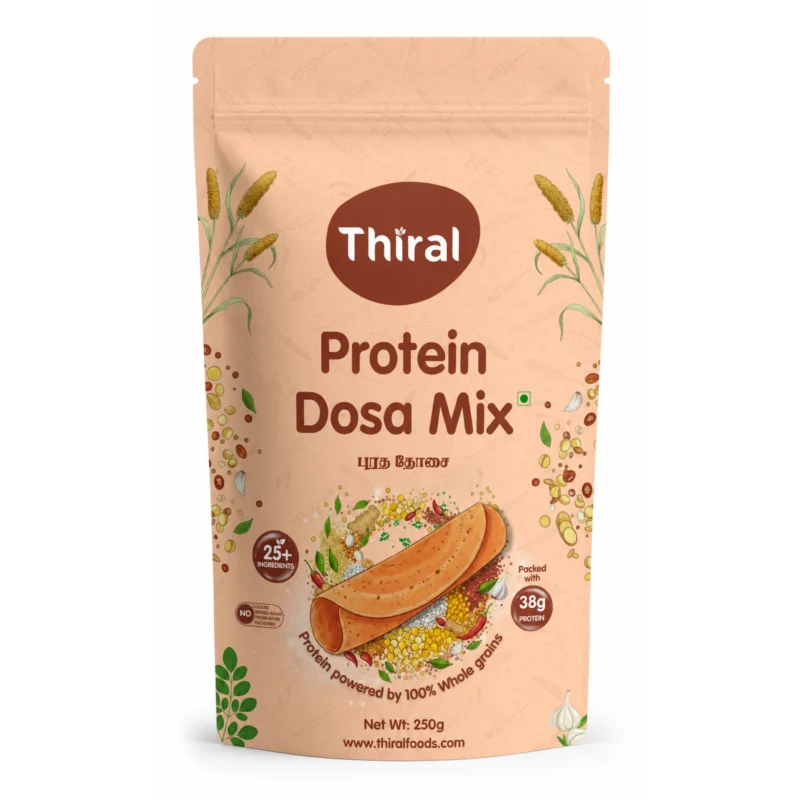
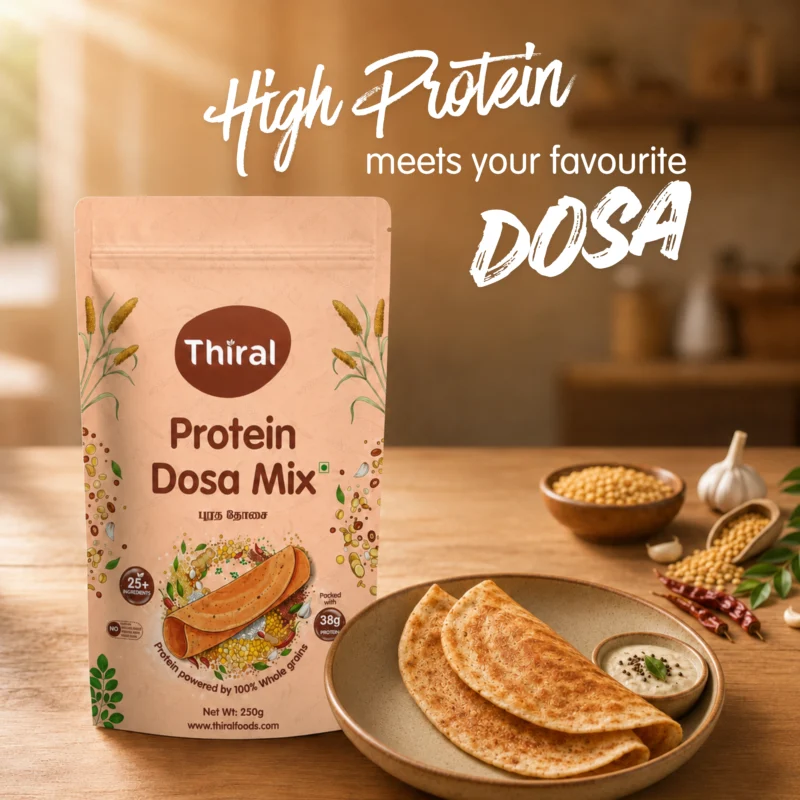
The Protein Dosa Mix uses 26 grains and dals, each soaked, sprouted, and dried before blending. Most dosa mixes use fewer than 10 ingredients and lean heavily on polished rice. This one doesn’t. No maida. No preservatives. It closes the protein gap that most Indian breakfasts carry without anyone noticing.
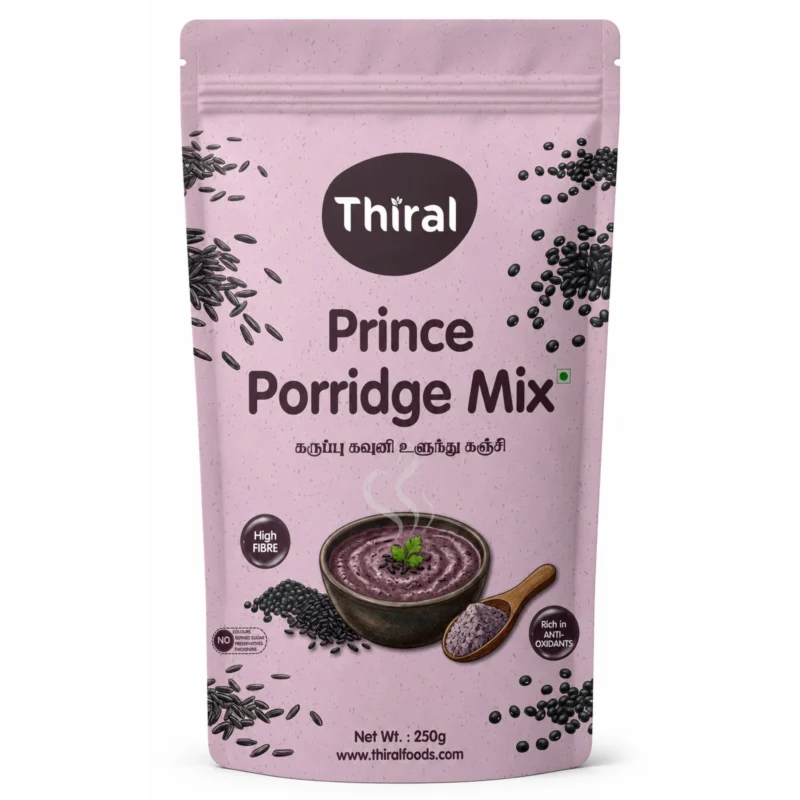
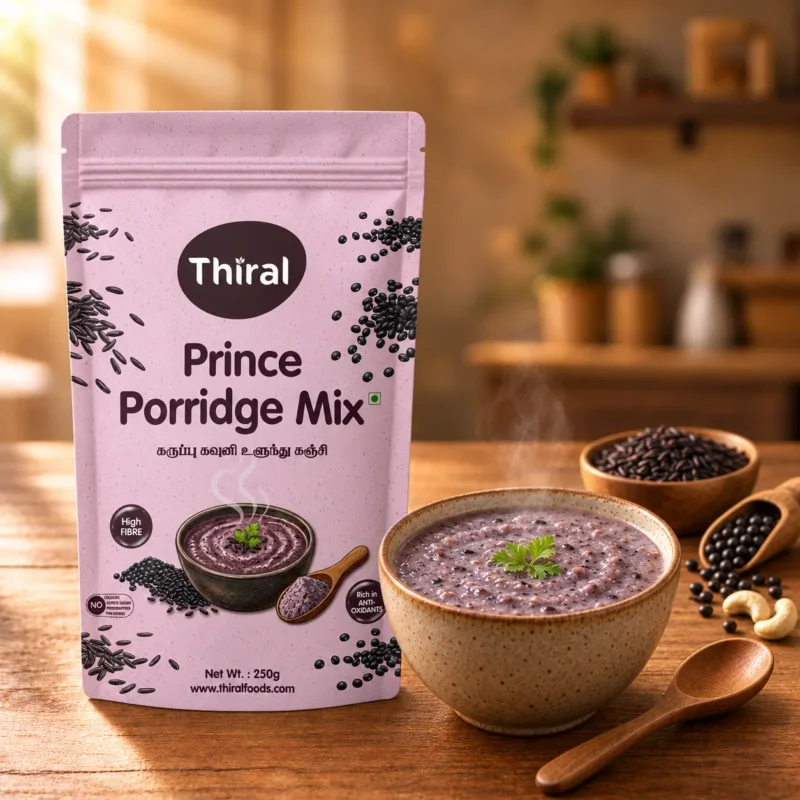
The Prince Porridge is built around Black Kavuni rice — savory, no added sugar, genuinely filling. Made for adults who want a real breakfast, not a sweet drink calling itself one.
The M3 Soup is the original recipe. The one neighbours kept calling my aunt for. Mudavattukkal, Mudakathan, Moringa — still made the way she made it.
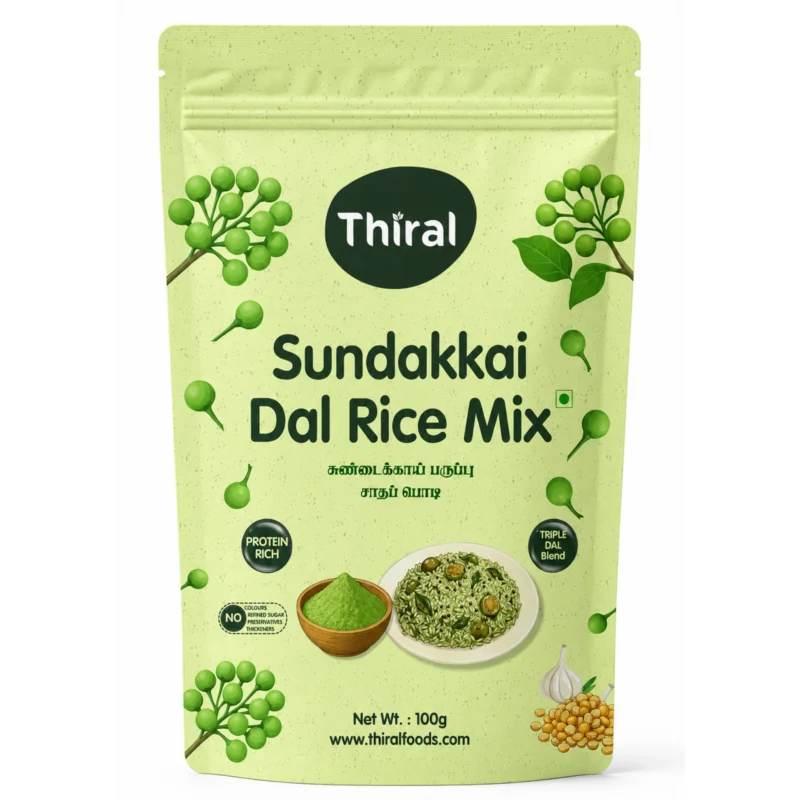
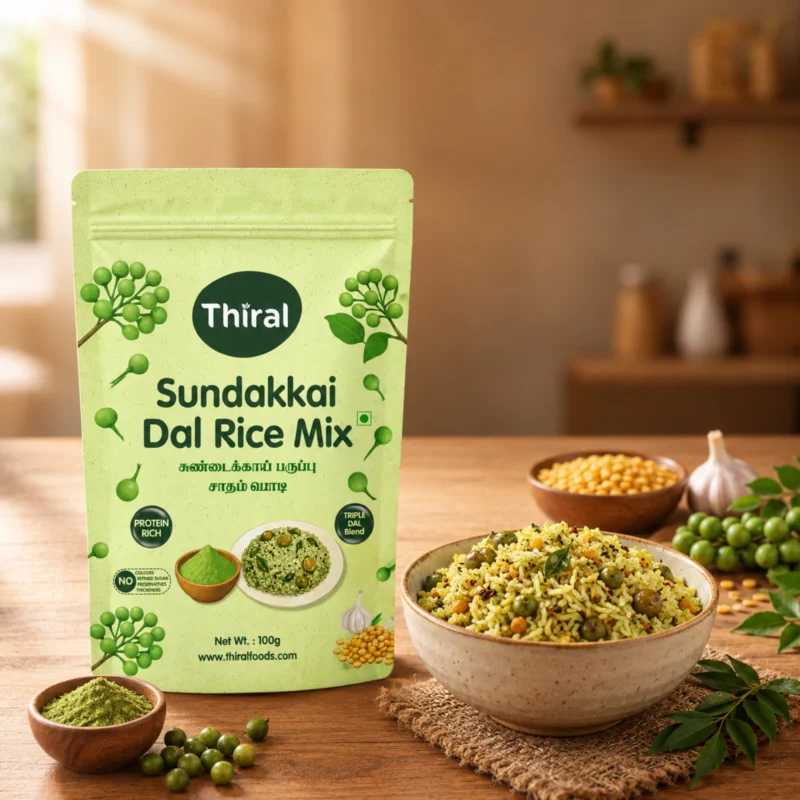
The rest of the range — Millet Pongal, Pirandai Idly Podi, Sundakkai Dal Rice, Banana Pancake, Moringa Millet Dosa — follows the same rule. One forgotten Tamil ingredient. One specific nutritional purpose. No maida, no refined sugar, no preservatives. Ready in under 5 minutes.
Grandmother had hours. You have five minutes. The nutrition shouldn’t change because the clock did.
Sundakkai Dal Rice Mix
Protein Dosa Mix
Prince Porridge Mix
Pirandai Idly Podi
Millet Pongal Mix
For YOU
If you’re crashing by noon on a breakfast that should work, if your child puts down every health drink after one sip, if you’ve read enough ingredient lists to know something is always hidden
— this is the food that was missing.
“Your grandmother cooked this way her whole life. We just packaged it for yours.”
Heritage protein. Tamil superfoods. Nothing artificial. Ready in five minutes.
Your plate has had this gap long enough.