
Recipes

Sundakkai Vattal Kulambu: a tangy turkey berry curry that’s better the next day

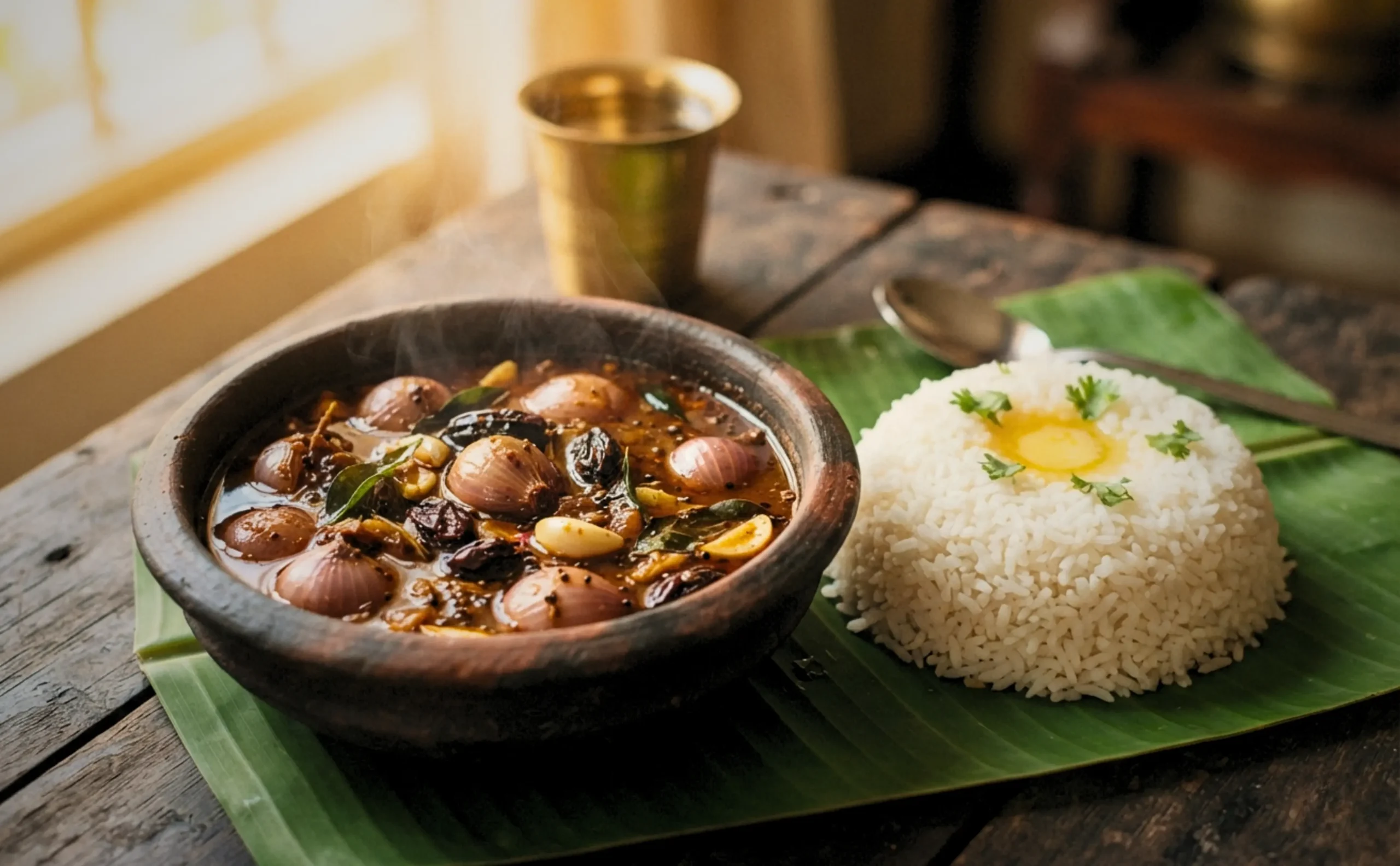
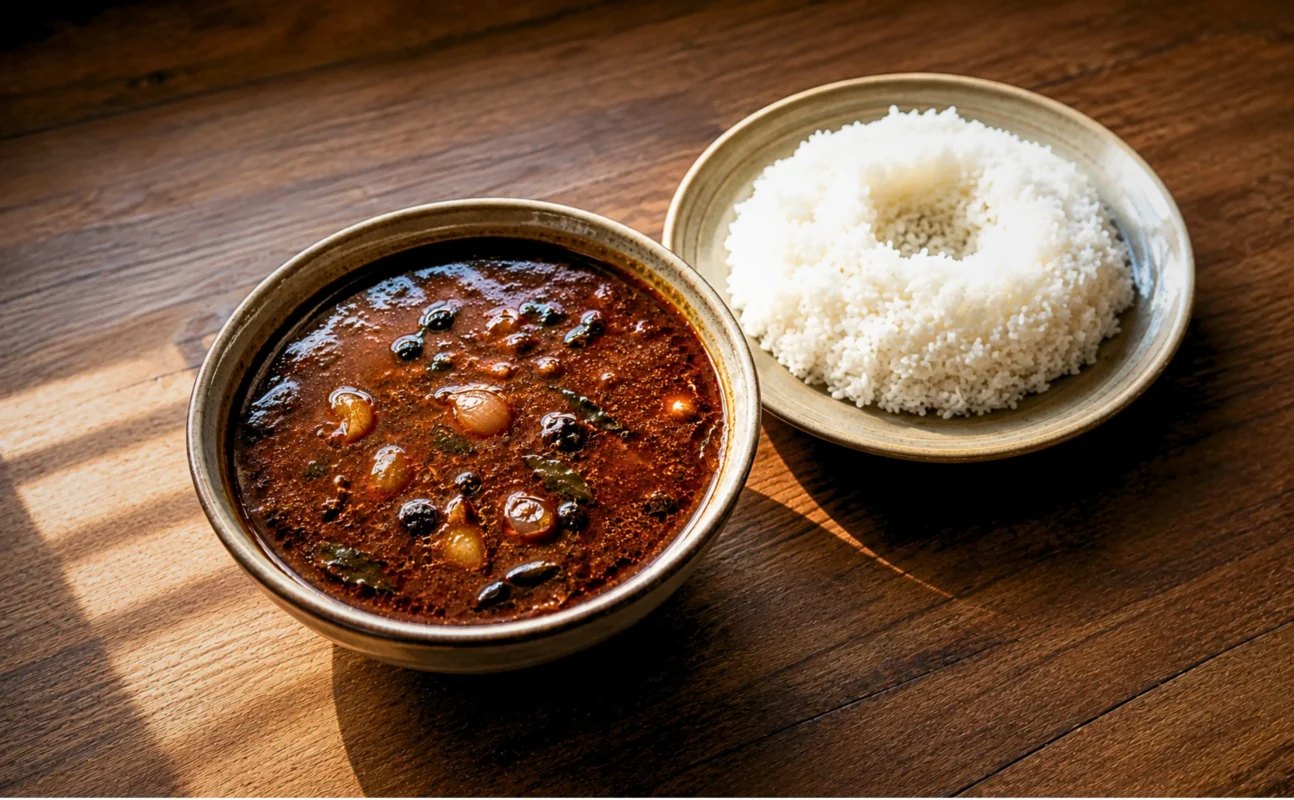
"Sundakai Vattal Kulambu served with steamed rice"

There's a particular curry that shows up in most Tamil kitchens on a rotation, usually the day rice needs something with real punch behind it. Sundakkai vattal kulambu is that curry. Tamarind, whole shallots, garlic, and dried sundakkai (turkey berry) simmered down until the oil separates on top — that's the sign it's ready, and it's the smell that pulls people to the kitchen before anyone's called for lunch.

If you grew up on this or you're trying it for the first time because you found sundakkai at an Indian grocery store and didn't know what to do with it, this recipe covers both.

What Sundakkai actually is, if you're new to it

Sundakkai, known in English as turkey berry, is a small, slightly bitter green berry used across South Indian cooking, usually dried into vattal form for exactly this kind of kulambu. The dried version holds up well in a long-simmered tamarind gravy and adds a flavor that's hard to get from anything else — a little sharp, a little bitter, balanced out completely once it sits in the tamarind and spice for long enough.

What you'll need?

  • 2 tbsp oil
  • 1 tsp mustard seeds
  • 1 tsp urad dal
  • ¼ tsp fenugreek seeds
  • 1 sprig curry leaves
  • 1 cup whole shallots
  • 1 cup garlic cloves
  • Tamarind extract, from a small lemon-sized ball of tamarind
  • ¼ tsp turmeric powder
  • 1 tbsp chilli powder
  • 1 tbsp coriander powder
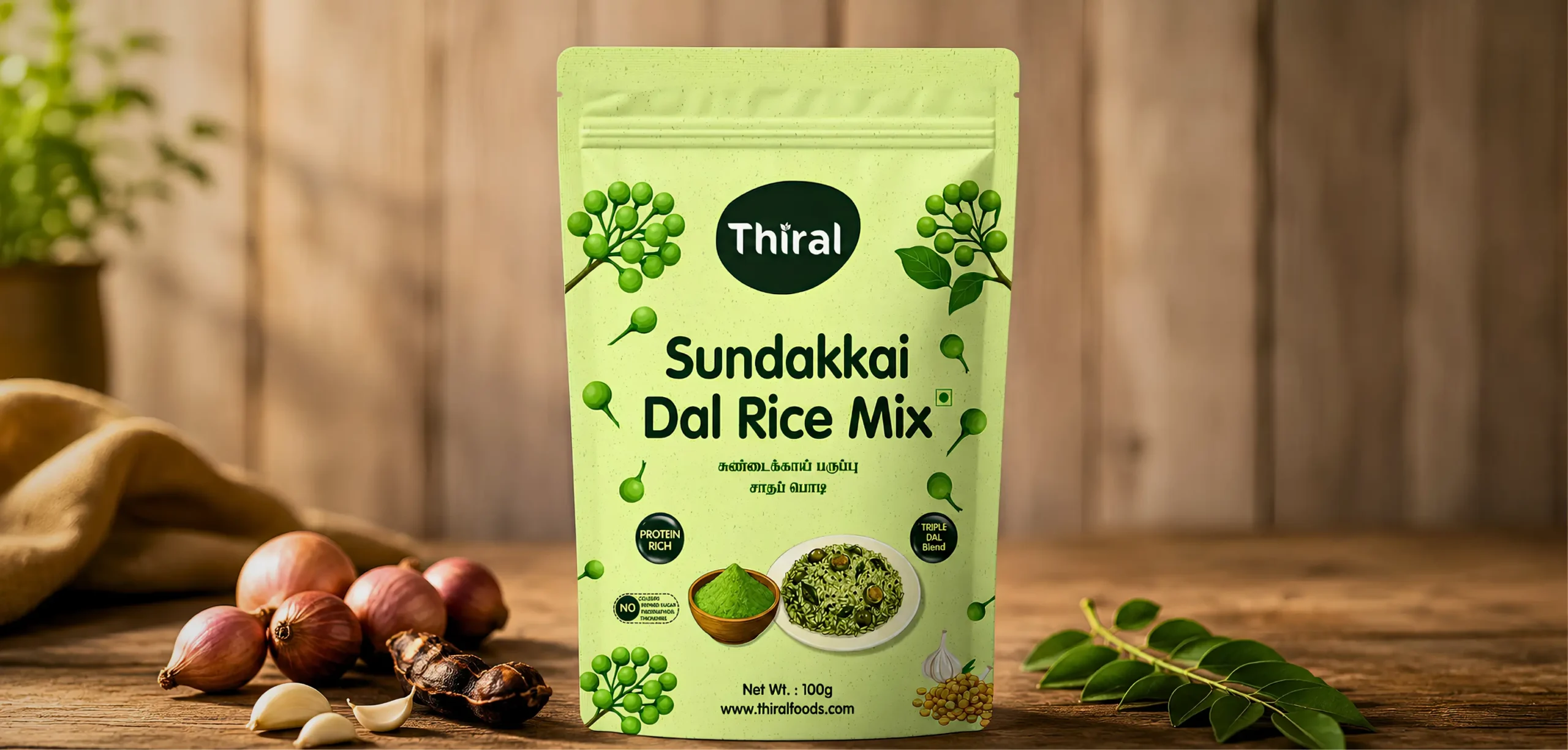
  • 1 tbsp Thiral's Sundakkai Dal Rice Mix
  • Salt, to taste
  • Dried sundakkai vattal, optional, for extra flavor

The dried sundakkai vattal is optional here because Thiral's Sundakkai Dal Rice Mix already carries that flavor into the curry. If you have vattal on hand and want the texture too, add it — the two work well together rather than competing.

How to make it?

  1. Heat oil in a kadai or pan.
  2. Add mustard seeds and let them splutter. Add the urad dal and fenugreek seeds, and sauté until lightly golden.
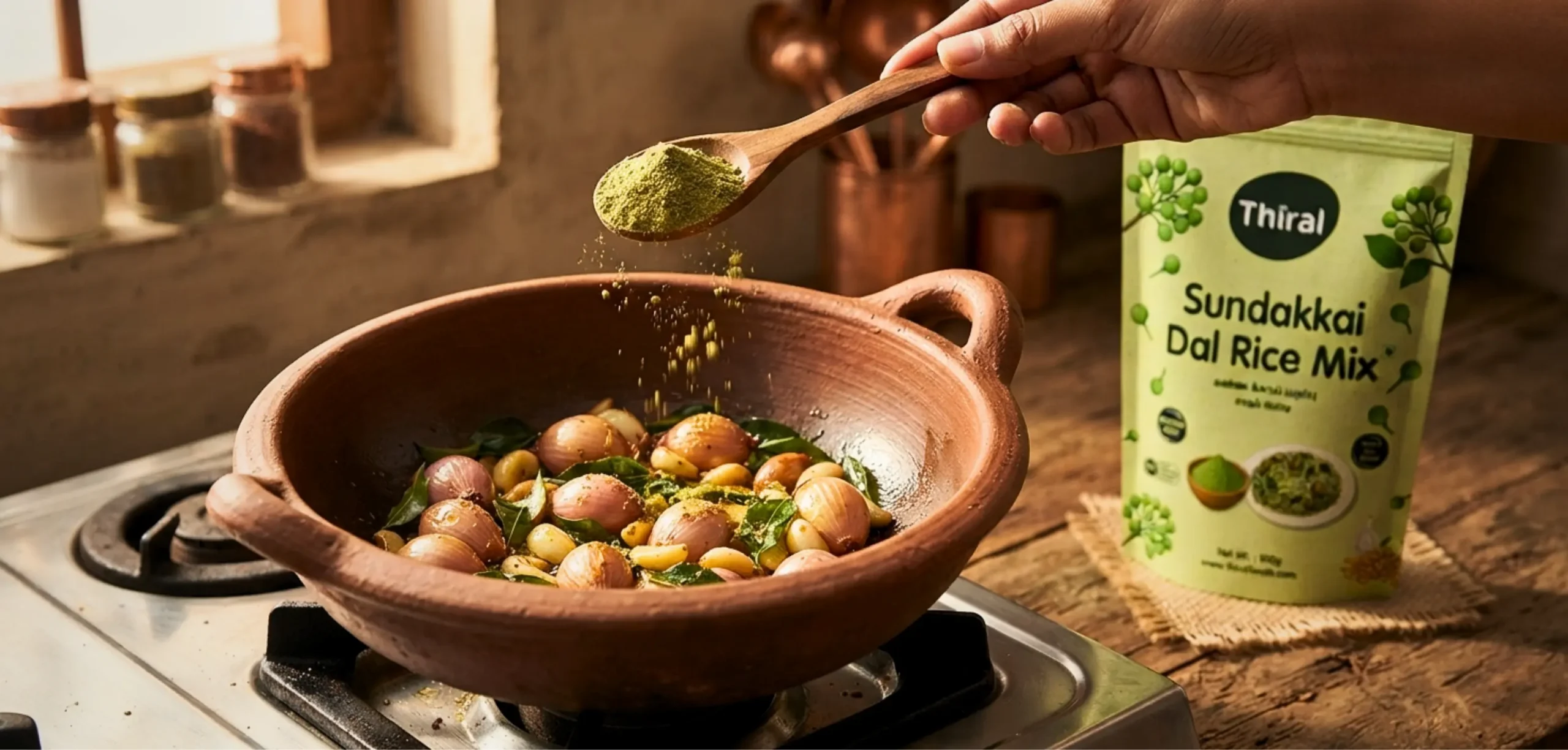
  3. Add curry leaves, the whole shallots, and garlic cloves. Sauté until the shallots turn soft and translucent.
  4. If using dried sundakkai vattal, add it now and sauté for a minute until aromatic.
  5. Pour in the tamarind extract and mix well.
  6. Add the turmeric powder, chilli powder, coriander powder, Thiral's Sundakkai Dal Rice Mix, and salt. Stir until everything comes together.
  7. Add enough water to bring the curry to a slightly thick consistency.
  8. Cover and let it simmer on medium-low for 15-20 minutes, until the raw smell is gone and the flavors have deepened.
  9. Once the oil starts to separate slightly on top, turn off the flame.

That oil separating is the tell. It means the tamarind has cooked down properly and the curry's ready, not before.

A few things that make this curry better

Kulambu like this tastes better the next day, once the shallots and garlic have had time to sit in the tamarind overnight. If you're making it ahead, don't rush that resting time. A drizzle of sesame oil instead of regular cooking oil at the start gives it a more traditional edge. And if the tang feels too sharp on the first taste, a small pinch of jaggery balances it out without dulling the sourness completely.

Why Sundakkai Dal Rice Mix makes this easier?

Getting the spice balance right in a kulambu usually takes some trial and error, especially with an ingredient as distinct as sundakkai. Thiral's Sundakkai Dal Rice Mix is built around that specific balance, so the depth you're used to from a well-made kulambu shows up reliably, without needing to eyeball five different spice measurements every time.

Buy Thiral's Sundakkai Dal Rice Mix here.

Questions people ask

  • What is sundakkai in English?
    Sundakkai is called turkey berry in English. It's a small, slightly bitter berry, usually dried and used in South Indian tamarind-based curries.
  • Can I make this without dried sundakkai vattal?
    Yes. Thiral's Sundakkai Dal Rice Mix already carries the sundakkai flavor into the curry, so the vattal is optional if you don't have it on hand.
  • How long does this curry keep?
    It keeps well in the fridge for about a week, and the flavor actually improves after the first day.
  • Is this curry very spicy?
    It's tangy more than fiery. Adjust the chilli powder up or down depending on how much heat you want.
  • Where can I buy Sundakkai Dal Rice Mix?
    Directly from thiralfoods.com, along with our other traditional mixes.

Leave a Reply

Your email address will not be published. Required fields are marked *